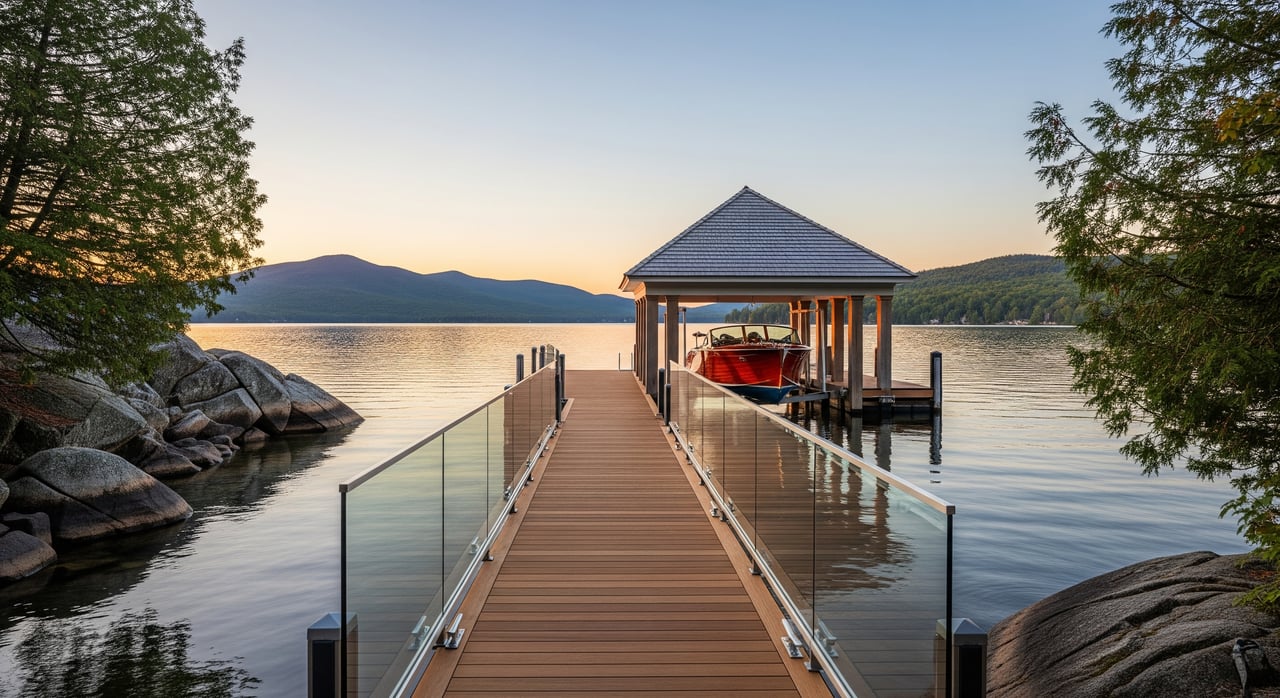
Choosing a dock on Lake Winnipesaukee can feel like learning a new language. Exposure, ice, and permits all shape what will actually work on your shoreline. If you are buying in Gilford, understanding these factors early will help you pick the right design and avoid costly surprises. In this guide, you will learn how local conditions affect dock types, what to know about lifts and approvals, and a simple checklist to evaluate a property. Let’s dive in.
Gilford shoreline realities
Gilford sits on a large, busy lake with seasonal ice and varied shorelines. Some properties sit in quiet coves with gentle water, while others face long stretches of open lake with stronger waves and boat wakes. Your shoreline’s orientation, nearby points or islands, and bottom type all influence the right solution.
Seasonal ice forms most winters and can push hard on structures. Many owners remove seasonal docks and lifts or secure them for winter. Water depth and the lakebed matter too. Bedrock, sand, gravel, or muck each favor different anchoring methods and costs.
Dock types at a glance
Seasonal aluminum modular docks
These are lightweight aluminum frames with floats, typically installed in spring and removed before ice. They have low routine maintenance and adjust easily to water level changes.
- Pros: low corrosion in freshwater, quick seasonal setup, flexible in varying water levels, minimal in-water footprint.
- Cons: more movement in waves and wakes, floats and hardware can be damaged by ice if left in, may need robust anchoring for larger boats.
- Best for Gilford: sheltered coves or moderate exposure when you plan seasonal removal and want a lighter environmental touch.
Piling (post) docks
Piling docks use driven, augered, or helical posts to support fixed decking or guide floating sections. They offer a stable platform for boarding and mooring.
- Pros: improved stability in waves, supports heavier loads and larger boats, can be designed to perform through ice if built for local conditions.
- Cons: more invasive installation, higher upfront cost, pilings can still be damaged by severe ice if not engineered correctly.
- Best for Gilford: more exposed shorelines or frequent boaters who value stability and have suitable lakebed conditions.
Crib docks
Crib docks use heavy timber boxes filled with stone to form a permanent base, with decking on top. They are extremely solid once in place.
- Pros: very stable with low movement, durable under heavy loads.
- Cons: significant lakebed alteration, higher environmental impact, stricter regulatory scrutiny, and higher cost.
- Best for Gilford: only where stability needs are high and permitting allows. Expect more detailed environmental review on Winnipesaukee.
Heavy-duty floating systems
Larger float modules with strong anchoring can improve stability in moderate wave conditions. Chains, cables, and spring-style anchors help absorb motion.
- Pros: adaptable and can be tuned with stronger anchors and guides.
- Cons: still move in waves and require careful sizing and anchoring; must be removed or secured for ice.
- Best for Gilford: moderately exposed sites where you want a floating solution but need more stability than a light seasonal system.
Match your dock to exposure and bottom
Start with your site’s exposure. If you face a long fetch and see frequent wakes from larger boats, prioritize stability. Pilings or a heavy-duty floating system are typical choices. In protected coves, seasonal aluminum floats often perform well and are easier to remove before ice.
Next, consider the substrate. Firm sand or gravel can accept anchors or pilings more readily. Bedrock often needs specialized fastening. Soft muck may limit piling performance and push you toward specific anchoring strategies or more permanent foundations, subject to permits.
Finally, align your choice with your boat size and use. Larger, heavier boats need sturdier structures and wider slips. In all cases, plan for winter. Many Winnipesaukee owners remove seasonal components well before freeze-up.
Boat lifts that fit
Boat lifts protect your hull, simplify boarding, and keep the boat steady in chop. Your lift should match both boat weight and dock style.
Floating lifts
These cradle the boat on buoyant platforms and are usually removed for winter.
- Best when you want easy seasonal removal and have a floating or modular dock. Ensure anchors and guides are sized for wave action.
Vertical hydraulic or electric lifts
These raise the boat on posts or guides above the water.
- Best for larger boats and frequent use. Plan for mechanical maintenance and winter procedures, and confirm power needs and clearances.
Cantilever lifts
These use a manual or powered winch to raise the boat out of the water.
- Best for smaller boats with simple, reliable operation. They are commonly removed for winter to avoid ice loading.
Permits and approvals in Gilford and NH
Shoreline work typically involves both the Town of Gilford and the New Hampshire Department of Environmental Services. Start early so you understand what is allowed and how long approvals may take.
- Local process: contact the Town of Gilford Building, Planning, Zoning, and Conservation offices to confirm allowed uses, setbacks, length limits, and submittal needs.
- State process: the New Hampshire Department of Environmental Services oversees wetlands and shoreland protections. Seasonal, temporary docks may have different thresholds than permanent pilings or cribs.
- Federal review: the U.S. Army Corps of Engineers may be involved for certain in-water work, depending on scope.
- Timing: plan for weeks to months for review, especially if hearings or notices are required. Installers book early each spring.
Permitting often focuses on minimizing shoreland disturbance, protecting vegetation and habitat, and controlling sediment during installation. Confirm insurance implications with your carrier once your design is set.
Site assessment checklist
Use this quick list to evaluate a property before you commit to a design:
- Boat type, length, beam, and weight.
- Water depth at the proposed dock location, especially at low water.
- Shoreline substrate: bedrock, sand, gravel, or muck.
- Exposure: protected cove or open fetch; observe wind and weekend boat traffic.
- Ice behavior: typical formation and depth at your shore.
- Access for equipment: roads, staging, and any easements.
- Navigation and neighbors: placement relative to lanes and setbacks.
- Permitting: town rules, state thresholds, drawings, surveys, and timeline.
- Maintenance capacity: who handles seasonal removal and lift service.
- Environmental conditions: vegetation, spawning areas, or protected habitats.
Maintenance and winterization
Inspect hardware, fasteners, floats, pilings, and anchors at least once a season. Waves and wakes can loosen chains and anchors, so check tension and wear each spring and fall. In freshwater, corrosion is lower but not zero. Monitor treated wood and aluminum connections.
Plan a clear winter strategy. Many Gilford owners remove floating dock sections and lifts before freeze. If your structure is rated to stay in, follow the manufacturer’s guidance and any local conditions set during permitting. Keep an eye on shoreline vegetation and erosion, and consult state guidance if you notice changes.
Your next steps
- Walk the shoreline during both calm and busy boating periods to judge exposure.
- Call the Town of Gilford and the NH DES to confirm what approvals apply to your plan.
- Speak with marine contractors who work on Winnipesaukee to price options, timelines, and winter service.
If you are weighing dock options as part of a home search, you do not have to navigate it alone. For waterfront guidance tailored to your goals, connect with Meredith Connor for calm, experienced advice and local connections.
FAQs
Do I always need a permit for a dock in Gilford?
- Not always. Requirements depend on structure type and whether work disturbs the lakebed or shoreland; confirm with the Town of Gilford and NH DES early in planning.
Can I leave my dock or lift in over winter on Winnipesaukee?
- Many owners remove seasonal systems to avoid ice damage; some designs can stay if built and permitted for ice conditions, but local exposure and insurance matter.
Which dock type works best on exposed Gilford shorelines?
- Pilings or heavy-duty floating systems are often preferred for stability in waves and wakes, sized and anchored for local conditions.
What drives the total cost of a dock project?
- Exposure, bottom type, boat size, structure type, and permitting scope are key drivers, plus installation access and winter service.
How do I choose the right boat lift for my dock?
- Match lift type to boat weight and dock style, plan for winter removal or protection, and confirm clearances and power needs if using a hydraulic or electric system.