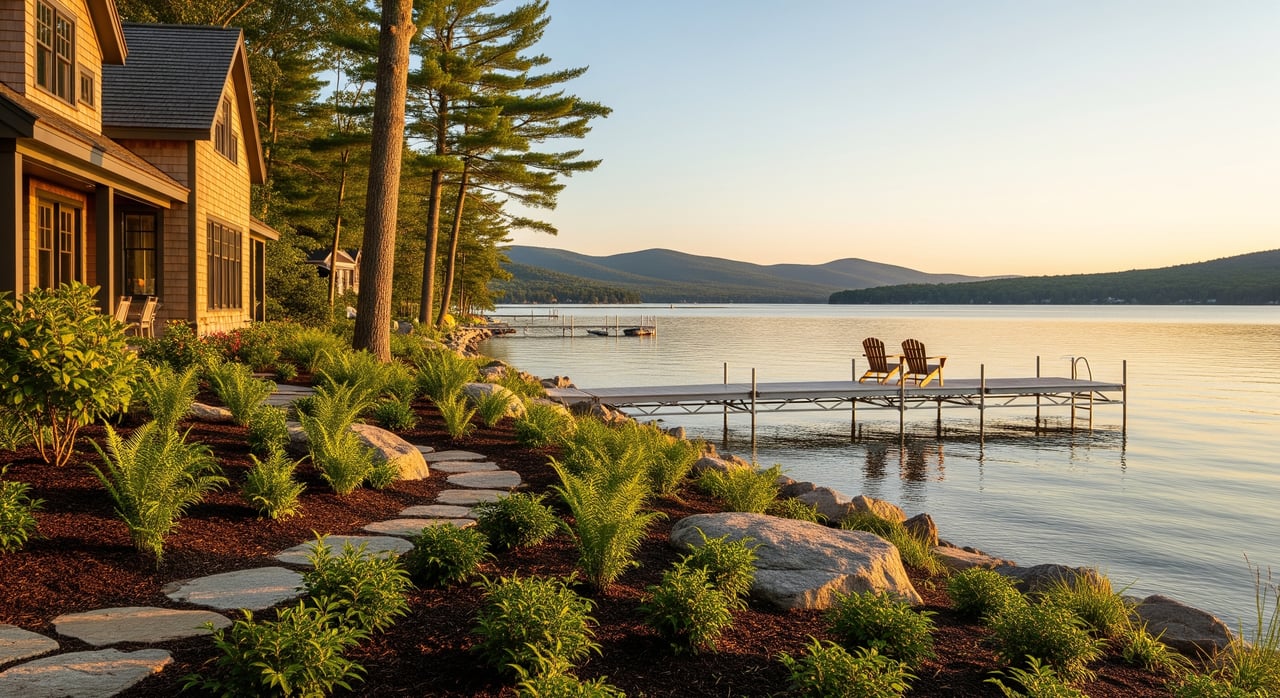
Buying a waterfront home in Laconia is exciting, but the shoreline is more than a view. New Hampshire’s shoreland rules shape what you can change outside, from trees and lawns to decks and driveways. If you plan any post-closing projects, a little prep will save you time, stress, and money. This guide gives you the practical basics so you can buy confidently and plan upgrades the right way. Let’s dive in.
What shoreland rules do
New Hampshire’s Shoreland Water Quality Protection framework exists to protect water quality, reduce erosion, and preserve habitat along lakes, ponds, and rivers. The program is administered by the NH Department of Environmental Services. If your property falls within the mapped shoreland jurisdiction of a public waterbody, the state regulates certain work near the water.
In Laconia, many parcels on Lake Winnipesaukee’s Paugus Bay and around Opechee Pond are within this zone. Commonly regulated activities include vegetation removal, new structures or additions, shoreline stabilization, and expanded impervious surfaces like pavement or patios. The goal is simple: keep runoff and sediment out of the lake and keep the shoreline stable and healthy.
If you need official details, guidance, and permit forms, start with the NH Department of Environmental Services website. You can find program pages, homeowner fact sheets, and best practices by searching shoreland on the site.
Does my Laconia property qualify as shoreland
The rules apply if any portion of your lot is inside the shoreland jurisdiction mapped for that waterbody. During due diligence, ask for a recent survey and verify the waterbody reference line. Cross-check with municipal tax maps and NH DES resources to confirm the boundary.
If you are not sure, call NH DES before you plan any changes. A quick conversation can tell you whether your project is likely exempt, needs a simple notification, or requires a full permit. The earlier you engage, the smoother your renovation timeline will be.
How it affects common projects
Tree removal and view work
Maintaining a natural, layered buffer near the water is a core principle. Uncontrolled clearing is discouraged and can trigger enforcement. Limited, selective pruning for a view corridor is often possible when you preserve most of the buffer.
Before you cut, confirm what is allowed. If previous owners cleared without approval, you may inherit compliance issues. Ask the seller for permit records, and contact NH DES to discuss your plan and whether a shoreland approval is needed.
Impervious surfaces: driveways, patios, pools, decks
Impervious areas increase runoff and carry pollutants to the lake. Replacing small sections in the same footprint is often simpler than expanding. Adding or enlarging paved driveways, roof area, pools, or hardscape near the water commonly requires review and may require mitigation measures.
Design with water in mind. Consider permeable pavers or crushed stone, minimize footprints, and add infiltration or vegetated features to capture runoff. These best practices can reduce permitting complexity and improve long-term maintenance.
Building, additions, docks, and stabilization
New structures or expansions near the water are reviewed to manage setbacks, footprints, and stormwater. Like-for-like repairs may be easier to permit than enlargements. Shoreline stabilization is regulated, and natural or softer solutions are often preferred when site conditions allow.
For any planned addition or shore work, collect previous approvals and ask your contractor to prepare concept drawings. Expect that NH DES and the City of Laconia may both need to review your plans. Build permit timelines into your purchase and renovation schedule.
Permits and the review process
Types of approvals
Depending on the scope, your work may fit into one of several tracks:
- Activities allowed by rule when specific conditions are met
- Streamlined notifications or short-form approvals for moderate impacts
- Full permit reviews for larger or more complex projects
The right path depends on your site, your design, and cumulative impacts within the shoreland area.
What reviewers look for
Applications typically include a site plan or survey that shows the waterbody reference line, distances to the shoreline, and the location of proposed work. You should also expect to provide erosion control details and any stormwater best practices you will use during and after construction.
Review timelines vary. A smaller notification may move quickly, while a full permit often takes longer. Ask about current timing when you first speak with NH DES so you can set realistic expectations.
Enforcement and risk
Shoreland violations can lead to stop-work orders, fines, and the need for remediation or retroactive permits. If you suspect unpermitted work happened in the past, address it early. Confirming compliance before closing protects your investment and prevents surprises.
Smart design and BMPs for lakeside homes
Simple design choices can protect water quality and often make permitting easier. Common best management practices include:
- Maintain a dense, layered vegetated buffer with trees, shrubs, and groundcover
- Use narrow, defined paths or stone steps instead of wide clearings
- Direct roof runoff into rain gardens, stone drip edges, or infiltration trenches away from the lake
- Choose permeable materials for driveways and patios where feasible
- Minimize lawn at the water’s edge and favor native plantings that slow and filter runoff
- Install silt fences and erosion controls during construction, and re-vegetate disturbed areas quickly
Due diligence checklist for Laconia buyers
Use this checklist to organize your pre- and post-closing plan:
- Confirm shoreland jurisdiction
- Get the survey, identify the waterbody reference line, and check shoreland maps.
- Review past permits and records
- Request copies of any NH DES shoreland permits, local building permits, and disclosures of enforcement actions.
- Call NH DES early
- Discuss your ideas, ask what approvals are needed, and request the right forms and guidance.
- Coordinate with the City of Laconia
- Confirm zoning, building permits, septic rules, and any local shoreland or waterfront overlays.
- Line up the right team
- For larger projects, hire a surveyor, engineer, or contractor with shoreland experience.
- Integrate best practices
- Minimize impervious area and design for infiltration, buffers, and erosion control.
- Plan for time and cost
- Build review times, mitigation needs, and contractor schedules into your timeline and budget.
Laconia-specific context
Laconia waterfront neighborhoods around Paugus Bay and Opechee Pond often fall under both state shoreland rules and local ordinances. That means you may need state and municipal approvals. Early coordination helps you avoid redesigns and delays.
When you evaluate a listing, look for recent surveys, shoreline permits, septic approvals, and any recorded covenants. If something is missing, ask the seller to provide documentation or discuss alternatives, such as addressing an issue prior to closing.
Budget and timing tips
Even straightforward projects can require plans, site work, and best practices in the design. Build a realistic schedule that accounts for reviews, contractor availability, and seasonal conditions. Align your project scope with likely permit paths. A smaller footprint or permeable materials can reduce engineering costs and speed approvals.
For purchases that hinge on a future renovation, include permit feasibility in your offer timeline. You can often complete initial consultations during due diligence so you know what is possible before you commit.
Educational note and official resources
This guide is for research and education only. It is not legal advice, a permit determination, or a substitute for contacting regulators. Rules and thresholds can change, sites are unique, and you should confirm current requirements with the NH Department of Environmental Services and the City of Laconia before you begin work. For official program pages, guidance, and permit forms, visit the NH Department of Environmental Services website and search for shoreland resources.
Next steps and local help
Buying a lake home is about more than the shoreline, but shoreland planning is a critical part of your investment. If you want a clear path from offer to renovation, you deserve a local advocate who understands Laconia’s waterfront micro-markets and how the rules shape value.
Have questions about a specific property or a post-closing project plan? Reach out to Meredith Connor for calm, concierge-level guidance from search through permits and beyond. Let’s connect and map your next steps. Contact Meredith through the website at Meredith Connor.
FAQs
Do shoreland rules apply to my Laconia lakefront home
- If any part of your lot is inside the mapped shoreland jurisdiction for the waterbody, the rules apply, so confirm with a survey, municipal maps, and NH DES resources.
Can I clear trees to improve lake views on a Laconia property
- Limited, selective pruning for a view corridor is often possible, but large-scale clearing usually needs review, so preserve the buffer and speak with NH DES before cutting.
Do I need a shoreland permit to replace a deck or driveway in Laconia
- Like-for-like replacements that do not expand the footprint may be allowed, while expansions or new impervious areas commonly trigger shoreland review and approvals.
What if a previous owner did unpermitted shoreline work at a Laconia home
- Ask for prior permits and disclosures, verify with NH DES, and be prepared that remediation or retroactive approvals may be required to resolve noncompliance.
Who enforces shoreland regulations for properties in Laconia
- NH DES enforces state shoreland rules, and the City of Laconia may have additional permits or overlays, so coordinate with both for review and enforcement questions.
How can I reduce permitting hurdles for a lake-adjacent project in Laconia
- Keep footprints modest, use permeable materials, maintain a vegetated buffer, and include infiltration and erosion controls in your design, then engage NH DES early.